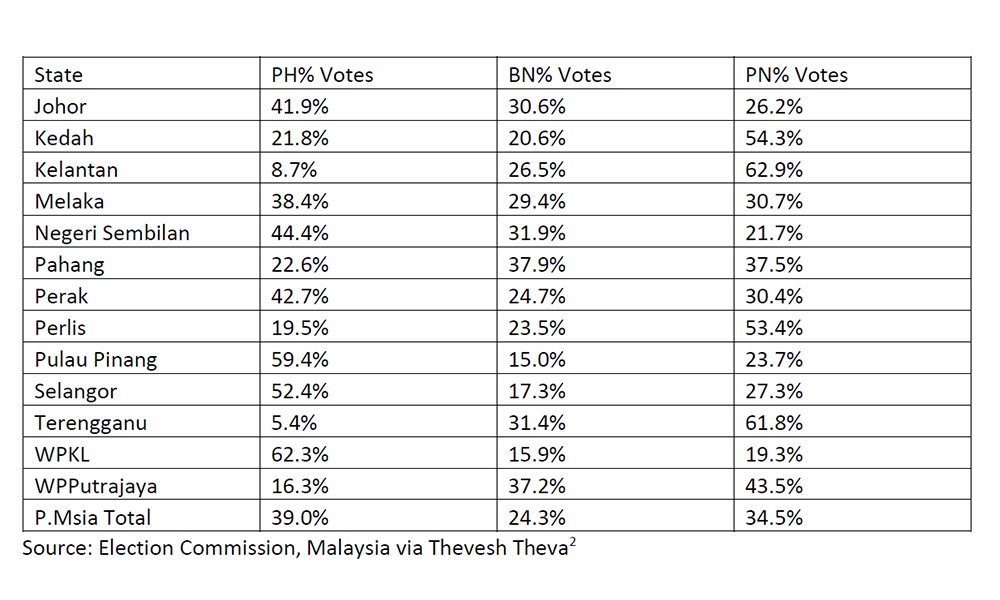
PRU15 VOTERS ANALYSIS
THE crux of the dispute is an 1878 agreement between Sultan Mohamet Jamal Al Alam (the then Sultan of Sulu), Baron de Overbeck and Alfred Dent, which granted perpetual sovereign rights over what is parts of Sabah today, in return for an annual token payment of RM5,300, which Malaysia had been paying since 1878....

“Those who drink the water
should never forget those
who dug the well.”
Dear Tan Sri Nazir,
First and foremost, I hope it is not too late for me to congratulate you on being bestowed the title “Tan Sri” and for publishing your memoirs, ‘What’s in a Name’.
When reading the book, I realised that my name had been mentioned several times. As much as I am honoured to be referred to as a Malaysian corporate figure of those days, I wish to express my utmost disappointment with some parts of the book which constitute major misrepresentations and errors. As the proverb goes:
“The first person to speak always seems right until someone comes and asks the right questions.”
There is also a maxim attributed to Nazi propagandist Joseph Goebbels which reads:
“If you tell a lie big enough and keep repeating it often enough, people will eventually come to believe it.”
I am determined not to let this happen.
Umno assets
I wish to set the record straight before everyone starts forgetting. According to your book –
“Halim claimed that he was (only) paid RM165m to give up his business empire. If true, the payment was probably apt; however grand his appearance, Halim was created by and for the Umno-linked companies system. At the end of the day, he was a well-paid employee of the system.”
What you had said was also relayed by Dr Mahathir Mohamad to Rashid Manaf in April 2010, that:
“He had been informed by Tan Sri Nor (Nor Mohamed Yakcop) that Khazanah had taken over assets that belonged to Umno, not Tan Sri Halim. Because of this, there was never any reason to pay Tan Sri Halim (in) the first place.”
This idea was also mentioned by Abdul Azim Zabidi, an Umno Treasurer, in his Statutory Declaration dated Sep 5, 2012:
“Semasa saya menjadi Bendahari Umno saya pernah berbincang dengan Tan Sri Nor Mohamed Yakcop yang pada masa itu adalah Menteri Kewangan II yang telah memberitahu saya bahawa Renong Berhad dan UEM Berhad bukan dimiliki oleh Tan Sri Halim Bin Saad tetapi adalah kepunyaan Umno.”
(“When I was Umno treasurer I had a discussion with Tan Sri Nor Mohamed Yakcop, the then Finance Minister II, who told me that Renong Berhad and UEM Berhad were not owned by Tan Sri Halim Bin Saad but by Umno.”)
This, however, is not true.
All my assets were acquired using my own funds and borrowings. The purchase of these assets was never funded by Umno.
In 1989 and 1990, I bought UEM shares from the Official Assignee, who administered the assets of Umno when the party was declared unlawful in 1988, using my own resources, for RM178 million. I also bought the Fleet Group for RM50 million.
This was confirmed in a book titled “Daim Zainuddin: Malaysia’s Revolutionary and Troubleshooter,” authored by Michael Backman. Thereafter, Daim Zainuddin also confirmed that all assets of these entities no longer belonged to Umno:
“Daim confirms that after the 1990 sale, no longer was there any commercial link between Umno and Renong/UEM. He says that persistent rumours otherwise were a constant millstone on Halim’s neck.”
This was also confirmed by Anwar Ibrahim in Parliament during a parliamentary sitting on Nov 24, 1997 where he said:
“Saya ingin menjelaskan bahawa saya Timbalan Presiden Umno, yang saya tahu UEM-Renong tidak ada hubung kait dengan Umno.”
(“I wish to clarify that as deputy president of Umno, what I know is that UEM-Renong has no connections with Umno.”)
What Daim forgot to mention was that I paid the Official Assignee RM50 million in cash and assumed RM554 million in debts when I took over 100% of Fleet Holdings Sdn Bhd. In addition, the group had close to RM300 million guarantees. Moreover, Fleet Holdings only had a paid-up capital of RM1,000,002.
What started as a sale and purchase ended up as a rescue deal. That rescue cost me RM508 million. I wrote to the President of Umno about it, but I was never paid.
I also contributed RM60 million in profit to the Official Assignee when I rescued 60% of Seri Pacific Corporation Sdn Bhd (now Seri Pacific Hotel Kuala Lumpur) and delivered it to the Official Assignee at zero cost.
If what I said above is not true, please prove otherwise. I have all the documents with me and they are available for your inspection.
Put Option / General Offer
I wish to make specific reference to the chapter in your book titled ‘Jay Le Taxi,’ at page 135, regarding my put option for the UEM shares, where you said:
“That ‘put’ option to make him buy shares was exercisable between March 2000 and February 2001, but no one seriously believed that Halim would be able to honour it.”
I believe this is an insinuation that I was not capable of completing the put option.
Here, I wish to clarify that the payment terms of the put option were as follows: –
The first payment was duly made.
On July 12, 2001, before the deadline for payment of the second tranche, I was called by the then prime minister, Mahathir, and Nor Yakcop to stop the put option/general offer. This was confirmed by my lawyer then, Rashid Manaf who was in a meeting with Nor Yakcop when he told me in no uncertain terms not to proceed with the proposed put option/general offer.
At all material times, I had financial support from Credit Suisse to complete the put option/general offer but was told not to proceed.
When I objected to Nor Yakcop’s demand, he called the then chairman of the Securities Commission, Ali Kadir, and instructed him to summon all UEM board members, giving them strict instructions not to allow me to proceed with the put option/general offer.
You may check this with UEM’s directors or its company secretary, some of whom are still around.
Given the actions and high-handed behaviour of Nor Yakcop at that time, my lawyer Rashid Manaf advised me not to go against the wishes of the people in power. He also advised me to accept the terms given to me by Nor Yakcop.
If I had no money, why did they go to the extent of stopping the put option/ general offer? All they needed to do was wait a few days and call a default on July 14, 2001. This was a blatant act of depriving me of my rights to my assets.
As for me wanting to acquire the Renong shares owned by Time Engineering, you wrote:
“Halim had until July that year to raise the RM873 million he needed to buy back the Renong shares. Clearly, he didn’t have the money and was giving false hope to the creditors.”
For your information, this was part of my proposed general offer. Had I proceeded with the general offer, this issue would have become academic.
Furthermore, my decision not to proceed with the put option/general offer has always been misinterpreted as a bailout by the government. At no point in time did the Renong group (which was under my control) under any circumstances require any bailout by the government.
The North-South Highway (with its accompanying fibre optic network) that became one of the most valuable assets of UEM was, Alhamdulillah, built by me, and completed 15 months ahead of its seven year contract, to the highest standards.
This was achieved despite various challenges through years of effort, sweat, planning and sacrifice. It was not something I acquired through corporate dealing.
Proprietorship takes on a deeper meaning when something profound and beneficial is built from scratch. So, it rankles a little deeper, when after being deprived of consideration which was agreed upon at the point of sale, insouciant comments are made by those who should know better.
Renong/UEM Bailout
You have also suggested that the fall of Renong was inevitable, and the government had to save Renong from me via a takeover by Khazanah. That again, is not true.
As repeated several times in the past, the Renong group’s debt was no risk to the market or to the banking system.
If you check the records, the bonds issued by Plus, UEM and Renong in 1999 were A-rated and were adequately secured by the group’s internal assets and Projek Lebuhraya Utara-Selatan Berhad’s (Plus) cash-flows. Here is what the Rating Agency of Malaysia (RAM) said about the bonds:
“RAM has assigned a structured rating of Aᵌ(s) to the proposed RM16 billion nominal amount of PLUS Bonds and RM2.193 billion nominal amount of Redeemable Convertible Bonds (RCBs).
“The Aᵌ(s) rating which is a strong investment grade rating reflects the resilience of PLUS’ cash flow generating capabilities”.
Time
I now wish to comment on the issue of Time Engineering and TimeDotCom.
The Time group debt was a stand-alone debt and not part of the Plus/Plus SPV Bonds. Thus, any failure would not have affected the group.
A few days after signing it, I was told to abort a sale to Singtel of Time Engineering and 20% of TimeDotCom for RM1.67 billion, which indicates that the total value of TimeDotCom was RM8.34 billion. Further, the 15% shareholding in Time Engineering was being offered for RM0.649 billion.
In the end, I had to accept an offer from Khazanah for RM3.4 billion less. From what I saw, neither Khazanah, Renong, UEM or Time was interested in the offer. Khazanah already had Telekom Malaysia in its stable.
We did not like the offer because Khazanah lacked the relevant expertise and a partnership would not enhance the share price.
Had they been sold to Singtel, I could have reduced the group debt significantly and further unlocked more potential for TimeDotCom as Singtel could have brought value to TimeDotCom in terms of expertise and skills to grow the business.
As a banker and the CEO of CIMB and as advisor to the group, you were aware of Bank Negara’s plan put forward by its Corporate Debt Restructuring Committee (CDRC).
Ironically, you had hosted the signing ceremony in 1999 for the Renong restructuring scheme and even gave a speech on CIMB’s behalf at the ceremony.
In your speech, you quoted the CDRC statement that there was no bailout. Your book clearly contradicts your own words in 1999.
The objective of the restructuring was to ensure that all UEM and Renong creditors would be paid in full and solely out of the Renong group’s assets, to avoid a distress sale of the Group’s assets, and to ensure that Renong and UEM remain financially viable over growing concerns that are well positioned to take advantage of and benefit from the anticipated recovery in the nation’s economy. Do feel free to check this fact in Bank Negara’s CDRC statement.
My question is, why would you call it a rescue when there wasn’t a default or bailout? What is the need to rescue an already restructured group?
Why not rush in to rescue an unrestructured group, say for example the Lion Group, which had a debt of USD2.7 billion (then equivalent to RM10.1billion)?
In 2002, Bloomberg ran a story which read:
“In 1999, he defaulted. 3 years later, Lion is the last big obstacle to Prime Minister, Tun Dr Mahathir Mohamad’s goal of resolving Malaysia’s more than RM8 billion of overdue corporate debt.
“More than 3 years later, creditors and Lion haven’t inked a debt repayment plan.”
As of December 2005, that restructuring had not been completed. I believe that even as of 2018, nothing had been done. Why were you so eager instead to control a fully restructured group?
Putra
Here again, Putra’s was a stand-alone debt and not part of the Plus/Plus SPV Bonds. Thus, any failure would not have affected the group. Project costs then stood at RM7.5 billion.
You were the advisor and liquidator of Putra and Renong. This is what you said in the Renong Statement on April 26, 2002.
“The step to be taken or proposed to be taken by Renong in respect of the appointment of liquidators.
The takeover process of Putra via the liquidation route is a process mutually agreed by Renong, Putra and the Government. The takeover process is in accordance with the terms of the CA (Concession Agreement).
This is sadly untrue because that is not what the concession agreement says. The concession agreement says this:
“Default during operations period
In the case of default after the commencement of operation of the Railway the Government shall procure a Qualifying Substitute to purchase the right, title and interest of the Company under this Agreement and all assets of the Company relating to the Railway or itself purchase all assets of the Company relating to the Railway for a purchase price equal to the Project Cost.”
If you had followed this agreement, there would have been a refund of RM1.5 billion to Renong. Your action shortchanged Renong by RM1.5 billion.
The most reliable report would be the RAM Report dated May 2001. According to the RAM Report, the valuation of the group’s assets as at May 2001 stood at RM20.08 billion (made up of equity value in Plus Bhd of RM12.212 billion plus Renong/UEM listed shares and unlisted shares of RM7.874 billion, plus Renong’s share of Johor Land worth RM2.880 billion) versus liabilities of Plus SPV Bonds of RM8.37 billion (1999 value) or RM10.1 billion in 2001.
The Group assets would be RM23.926 billion if you add back the loss from rejecting the Singtel deal.
I invite you to inspect these records if you have any doubts.
With regard to your own corporate exercise in 1997, you and some senior staff of the group executed an Employee Share Option Scheme (ESOS). Unfortunately, it went underwater during the Asian Financial Crisis when it went short of margin calls.
As you are aware, I rescued it at a cost to me of more than RM52 million. A bank commissioned a book in 2003 entitled “Of People and Principle” and the writer, Zuraida Omar (deceased) wrote this:
“The senior management of the Commerce Group in particular, actually had reason to be depressed. When CAHB completed its capital raising exercise in June 1997, they were given rights for the shares, which were subscribed to with financing from another bank. For those who had taken up the rights, this privilege became a huge financial burden when the crisis broke out, as they had to service interest payments that came to thousands of ringgit per month. If help was not found to alleviate this burden, the Commerce Group Berhad would have a financially bankrupt management team. Fortunately, a ‘white knight’ came to the rescue and purchased the rights.”
As I am the “white knight” in question, I wish to remind you of the Chinese proverb which goes, “chi shui bu wang jue jin ren,” which translates to, “Those who drink the water should never forget those who dug the well.”
I wish you well.
Halim Saad is a former chairman of Renong Bhd and an FMT reader.
WHEN JOKKER LEAD US.
MP SPEAKS | Human Resources Minister M Saravanan is like an ostrich with his head in the sand, in delusion or he may be thinking that if he bravely speaks a lie people will believe him when he challenged Bagan MP Lim Guan Eng that he will resign if the latter can find flaws in his ministry’s effort to overcome the acute shortage of workers.
This is not the first time Saravanan put up a brave front when he told a lie.
On July 26, he told Parliament that the application for foreign workers can be done online without having to go through an agent and I told him that it was a big lie. He then challenged me to prove that he was lying.
I subsequently showed him it was impossible for employers to get the approval of foreign workers due to the various obstacles at the Human Resources Ministry and the Home Ministry without the help of an agent who has internal contacts in the ministries and that some people in his ministry were collecting RM1,500 per foreign worker before an interview is granted to an employer applying for the quota to employ foreign workers.
In response, Saravanan immediately decided that interviews can be conducted in each respective state and not solely at Human Resources Ministry in Putrajaya and that it will conduct walk-in interviews rather than the ministry fixing the interviews.
Not long thereafter, 10 people were arrested by the MACC related to corruption the in the Human Resources Ministry.
The problems are far from over and it is still very difficult to get approval for the foreign workers’ quota.
Reasons Saravanan should resign
The following 11 and many more are reasons why Saravanan should resign as promised.
(i) It still takes months for the application for foreign workers quota to be processed not unlike the situation before the recent changes made by him. Is there an unspoken intention that the long process will ensure that employers are forced to give bribes again?
For the past few years, it took so long for an application to be processed and it was almost impossible to get an application approved without using an agent who has the ministry’s internal contact. However, if you use an agent with additional payment, the approval could be obtained quickly.
(ii) Applications are rejected arbitrarily stating reasons that are untrue. For example, an application is rejected on the ground that the applicant has not advertised at JobStreet when this has been done or that the applicant is not entitled to apply for more workers when the Human Resources Ministry’s guidelines state that the employer is entitled to more workers.
(iii) Conducting mandatory interviews which are totally unnecessary as the Human Resources Ministry does not ask for any additional information during the interview which is not contained in the application or the supporting documents that were enclosed with the application.
(iv) An employer cannot proceed with the application through the Foreign Workers Centralised Management System (FWCMS) website when it states that the employer’s data needs to be updated. In order to update the data, the applicant has to go personally to the Home Ministry and Human Resources Ministry which are in Putrajaya. Why can’t the updating of data be done through the FWCMS website?
(v) After the interview is conducted, no time is specified when the levy payment slip will be issued. Employers are left in the dark.
(vi) After levy payment is made, the payment receipt and the letter of approval printed out from the computer have to be brought all the way to the Human Resources Ministry in Putrajaya to be stamped and certified as original copies.
Whether the receipt and the approval letter are genuine should be verified from the system and not use a rubber stamp which can be easily forged.
(vii) FWCMS is not linked to e-PLKS of the Home Ministry. Why can’t it be linked? The employer has to open a separate account with the Home Ministry for the e-PLKS.
(viii) Employer has to be present physically at the Home Ministry at Putrajaya to apply for the e-PLKS account. Why can’t it be applied online or at the immigration offices nationwide?
(ix) It has been informed that the application for e-PLKS has been shifted from the Putrajaya immigration office to the Kuala Lumpur immigration office. However, the Kuala Lumpur immigration office is not ready to receive applications.
(x) Current walk-in interview caused many people to queue up even at 4am when the office opens only at 8am. On Aug 29, it was reported that more than 1,000 employers turned up for the required interview but many were turned away as the ministry could only process about 300 applications.
Imagine the disappointment of the employers who came from very far away and have waited since early morning only to be turned away. Why can’t Human Resources Ministry arrange a systematic method for the employers to turn up for the interview? As stated earlier, this interview is totally unnecessary and should be scrapped.
(xi) Multiple changes in the application process both at the Human Resources Ministry and the Home Ministry caused the employers to be at a loss on how to apply for the quota for foreign workers.
The minister is not important, the nation is important. Due to the failure of the Human Resources minister and the government in handling the acute shortage of labour, it is estimated that our nation suffers about RM100 billion in losses every year.
As Saravanan is totally incompetent to manage his ministry, he should gracefully resign as promised.
NGEH KOO HAM is Beruas MP and DAP MPs' spokesperson on law and Parliament
MEROMPAK DANA RAKYAT SEWENANG-WENANGNYA
UNTUK PERIBADI, KELUARGA DAN PARTI ITU...
KUALA LUMPUR: A key witness in Datuk Seri Dr Ahmad Zahid Hamidi's corruption trial said the former deputy prime minister was labelled as 'monster' in his company Buku 555 (note book) which contained a list of people who were given money.
Ultra Kirana Sdn Bhd (UKSB) administrative manager David Tan Siong Sun said this in the Umno president's corruption trial involving the foreign visa system programme (VLN).
Tan said he codenamed Zahid as 'monster' after the famous hairy blue Mamee Monster snack in the company's ledger book which contained details of payments to several high-profile politicians.
"I was eating the snack when I was about to key in an entry in the book for Zahid used codenames for the recipients - including various politicians and government servants to conceal their identities," he said.
Tan, who is the 17th prosecution witness, said this during examination-in-chief by Deputy Public Prosecutor Datuk Raja Rozela Raja Toran.
The 47-year-old witness said he also made several other codenames for Zahid such as Z, ZH, MON, and Young Boy in the ledger.
Earlier, UKSB former director Harry Lee Vui Khun who testified as the 15th prosecution witness, confirmed that the company was paying cash in Singapore dollars on a monthly basis to Zahid from 2014 to 2018.
Harry said the payment to Zahid, which started with S$200,000 per month and began in late 2014 was increased to S$520,000 per month some time in 2017.
Zahid, 69, who is Bagan Datuk member of parliament, has pleaded not guilty to 33 charges of receiving SG$13.46 million from Ultra Kirana as inducement to extend the company's contract as the operator of a one-stop centre in China and the foreign visa system, as well as to maintain the agreement to supply a foreign visa integrated system paraphernalia to the same company by the Home Ministry.
He is also facing another seven charges of accepting SG$1,150,000, RM3,000,000, €15,000 and US$15,000 in cash from the same company, which he knew had connections with his function as then home minister.
The trial before judge Datuk Mohd Yazid Mustafa continues.
IN 2007, Boustead Naval Shipyard Sdn Bhd (BNS) — a unit of Boustead Heavy Industries Corporation Bhd (BHIC), which in turn is controlled by the Armed Forces Fund Board or LTAT — sought the support of the Economic Planning Unit (EPU) in the Prime Minister’s Department and the then defence minister Datuk Seri Najib Razak for a programme to build six littoral combat ships (LCS) at its Lumut dockyard. Aside from making sure the Malaysian Navy is suitably equipped, BNS said the programme would support activities and enhance the capabilities of the dockyard, and also enable it to continue with its vendor development programme for 2,000 Bumiputera suppliers. After several years of discussions between BNS with the EPU, ministries of finance (MoF ) and defence (Mindef) and the navy, in March 2011, the go-ahead was given to launch the programme at a cost of RM9.13 billion through direct negotiations with BNS. The six LCS are supposed to be delivered in stages, with the last one in 2023. To date, not a single one is ready although the government has paid BNS RM6 billion. BNS also needs additional funding of a few billion ringgit — on top of the original price tag of RM9.13 billion — to complete all six LCS which are currently in different stages of construction.

In May 2011, Mindef, then helmed by Datuk Seri Ahmad Zahid Hamidi, agreed to the Sigma design of the LCS by a Dutch firm and the combat management system (CMS) from French firm Palanise. The choice of Sigma and Palanise was also that of the Malaysian Navy (TLDM) as the end user of the LCS. But two months later in July, Mindef abruptly changed its mind following intense lobbying by BNS to opt for the Gowind design and SETIS CMS — both from France. The Gowind design is by France’s Naval Group, formerly DCNS, which also built the controversial Scorpene submarines in 2002 for Malaysia. Investigations into alleged kickbacks in the €1.2 billion deal are still ongoing in France.
The Mindef U-turn was met with strong objection by the then navy chief Tan Sri Abdul Aziz Jaafar, who wrote 10 letters, including to then prime minister Najib, Zahid, as well as to the Chief Secretary to the Government and the secretaries-general of MoF and Mindef. The thrust of his objection was that the choice of design should be decided by the end user, viz the navy, and not by the contractor BNS, and that Gowind and SETIS were unproven. But his protests were ignored and BNS proceeded with Gowind and SETIS.
The anger and frustration he felt was revealed when Abdul Aziz, who retired in 2015, testified to the Public Accounts Committee (PAC) in July, 2021.
Following are excerpts from his testimony:
“The letters have been archived. We archived to ensure that it will be available for reference, and I would not be blamed for the failure to perform in my job as the chief of the navy.
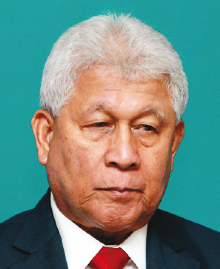
“We were fighting a losing battle. Right from the start, it was not right already as Boustead (BNS) was given leeway to choose what was right for themselves.
“Penipuan (cheating), manipulasi (manipulation), and I put it in the letters, it is recorded. I reported all those ... but I was not powerful enough, maybe, and they were too powerful, maybe. They were too powerful.
“The design by the Dutch, the Sigma is already a proven design.
In fact, it is now already operational in a few countries ... That was a loss of opportunity. They were very willing to work with BNS, but why we stayed with the French? I do not know. We had bad experiences dengan French, especially the submarines. We find that the French here does not fulfil their promises. We have got big issues now.”
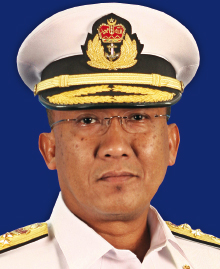
The big disagreement was between Abdul Aziz, as the then sitting navy chief, with the chairman of BNS Tan Sri Ahmad Ramli Mohd Nor, who was a former navy chief (1996-1998). This was alluded to by Zahid in his testimony to PAC when he was asked about the change from SIGMA to Godwind. Here are excerpts:
“There was a clash of personalities in TLDM at the time. The executive chairman of BNS was also a former navy chief. He knows about the needs of the end user. In this case, it was my view that it was the chairman who had the widest knowledge on maritime matters...”
BNS appointed two companies as the main contractors for the project — Contraves Advanced Devices Sdn Bhd (CAD) and Contraves Electrodynamics Sdn Bhd (CED). Boustead Heavy Industries Corporation Bhd (BHIC) held the majority 51% stake in both companies while Germany’s Rheinmetall Group held the remaining 49%. According to the testimony by forensic auditor Alliance IFA (M) Sdn Bhd, the JV agreement was lopsided, with BHIC virtually conceding decision-making and management control to the minority partner.
BHIC management and auditor had no access to documents of CAD and CED, and the banking mandate approved by CAD’s board was drafted in a way that signatories representing Rheinmetall had full authority to transact any business without involvement of BIHC’s representatives on the CAD board. There are also allegations that CAD made and were paid double claims of RM537 million.
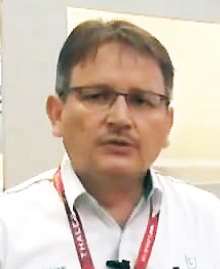
Alliance IFA executive director Prabhant Kumar said the BHIC board of directors led by chairman Tan Sri Lodin Wok Kamaruddin had agreed to such terms against the interest of BHIC. He told the PAC:
“Evidence suggested that CAD was used as a vehicle to — this is very important — to minimise transparency and to avoid the scrutiny and detection by the procurement team, the steering committee, and the internal audit of BHIC ... to avoid these three people, the scrutiny of the procurement team, the steering committee — because (BHIC) is a public-listed company. So, they have all these things in place you know, how to avoid it. CAD will be the vehicle... by entering into such a contract that does not allow them to enter and to look into the details and the nitty-gritty of the business, which has been taken by them (CAD).
“A total of 12 LoAs (letters of award) including VOs (variation orders) were issued to CAD/CED, valuing approximately RM3.3 billion, being 38% of the total value of the contract. The involvement of CAD resulted in a much higher cost than expected and provided an umbrella to hide the actual cost.
“I would like to tell you based on my 20 years of investigative experience, whenever manipulation is required to be done in a given contract, variation order is the biggest culprit, and that is what we have seen in this whole episode.”

According Prabhant Kumar of Ailliance IFA, decisions at BNS/BHIC were made by BNS chairman Ahmad Ramli, who was also BHIC managing director, and its director of the LCS programme Anuar Murad, often bypassing consideration from other senior executives.
“If we look into the management structure of BHIC ... Laksamana Madya Tan Sri Dato’ Seri Ahmad Ramli bin Mohd, he was the MD. David William Berry was the executive director. Datuk Ir Yahya bin Hashim, Anuar bin Murad, Ahmad Nordin who was taking care of the finance and accounts, Siti Naim binti Jamaluddin (legal), and Khalid bin Mohd (head of supply chain management).
“Now, amongst these seven ... most of these decisions were taken and signed by the number one (Ahmad Ramli) and number four (Anuar Murad). The rest, they had hardly any important role. Ahmad Nordin bin Mohamad who was chief financial officer, he should have raised the flag, but he failed to do that. Similarly, (the) head of Legal Department because they said that most of the things first used to be done by them, then it used to come to (their) table. For (them) just to fill up the blanks.
“I had interviewed Khalid bin Mohd almost for about 20 hours to understand and he opened layer after layer which explained the lack of transparency, the influence of Anuar bin Murad, rejecting all the suggestions, overruling the procurement committee’s decisions, and so on and so forth...”
BHIC chief executive Sharifuddin Md. Zaini Al-Manaf (who was appointed in April 2020) weighed in on the same matter in his PAC testimony in December 2021, saying that the purchase of OEM assets via CAD had created problems and led to much higher costs.
“Truth is there is no problem with local contractors. The main (problem) was the appointment of a joint venture (JV) company Contraves ... the setting up of Contraves itself raises questions. Why must we buy OEM assets through CAD? Why couldn’t we buy direct?
“The setting up of CAD was unclear as to the reason and the approval process. When we go to CAD, the price might have been higher by three or four times for no reason.
“I have asked MACC to investigate CAD. Problem is as a contract, they were legally appointed. As for invoices, we have to pay what is invoiced. From a commercial point of view, it appears there was no wrongdoing ... willing buyer willing seller, unless MACC can show proof that apart from prices that are three four times higher and there is [a] money trail to certain individuals. MACC has to help us to prove it.”
On Aug 10, Prime Minister Datuk Seri Ismail Sabri Yaakob said the cabinet had decided that the Special Committee on Governance Investigation, Government Procurement and Finance’s report on the LCS project, chaired by former auditor-general Tan Sri Ambrin Buang, would be made available to the public. The cabinet also wants to declassify the forensic audit done by Alliance IFA, subject to clearance by the Attorney-General’s Chambers and the auditor-general.
On Aug 11, MACC issued a statement saying it has completed its probe, recommended charges that should be made to the AGC and was waiting for a decision.


